

Trekking Udzungwa Mountains
Trekking Udzungwa Mountains
Trekking Udzungwa Mountains: An Unforgettable Adventure
Ever dreamt of stepping into a real-life Lost World, where unique wildlife thrives and ancient forests whisper tales? Then it’s time to discover the incredible Udzungwa Mountains! Tucked away in Tanzania, this captivating range is a biological wonderland, bursting with endemic species you won’t find anywhere else on the planet. Forget the usual; here, the adventure truly begins! Imagine yourself trekking Udzungwa Mountains, navigating lush trails to discover breathtaking waterfalls and encountering rare primates like the Iringa Red Colobus. If you’re seeking an immersive natural escape far from the crowds, the Udzungwa Mountains promise an unforgettable journey into the heart of African wilderness. Are you ready to answer its call?
Udzungwa Mountains – Where it is located?
The Udzungwa Mountains are prominently located in east-central Tanzania approximately 350 kilometers (220 miles) southwest of Dar es Salaam. These mountains park covers an area of 1,990 square Kilometers with a wide range of altitudes with the highest point 2,576 meters at Luhombero Peak. Udzungwa mountains forming a significant segment of the ancient Eastern Arc Mountains chain, which stretches from the Taita Hills in Kenya down to the Udzungwas. This unique and biodiverse range primarily spans across the Morogoro and Iringa regions of the country. Geographically, they are positioned to the southwest of the larger Southern Highlands, dramatically rising as a series of isolated forested blocks and steep escarpments that overlook the vast and fertile Kilombero Valley to their southeast. To the west, the mountains are bordered by the plateau leading towards the Great Rift Valley, while to the east, they gradually descend through miombo woodlands towards Tanzania’s coastal plains. This strategic and relatively isolated location, coupled with their long geological history, has contributed immensey to their high levels of endemism and the preservation of remarkable biodiversity, making them a vital ecological hotspot within East Africa.

Flora and Fauna of Udzungwa Mountains
The main characteristics of the Udzungwa Mountain forests range from miombo woodlands, bamboo forest, low land forest, montane forest to highland grassland. Known as the Eastern Afromontane Hotspot Udzungwa contains 10 species of primates which 4 among them do not found anywhere in the world. The endemic primate species of udzungwa include the Iringa (Uhehe) red colobus monkey, the Sanje-crested mangabey, the Amani mountain dwarf galago (bush baby) and the Matundu galago. Other primates includes blue monkeys, thick-tailed galago, black and white monkeys. The park is also a home to other animals such as red duiker, bush pigs, blue duiker, sun squirrel and bushbuck.
Udzungwa Mountains National Park is also a known as bird paradise with over 250 species of birds recorded include the rufous winged sunbird and Udzungwa partridge. The park is also a home to over 1300 species of butterfly where by 121 are endemic to Tanzania.
Game animals which found in Udzungwa include Lion, leopard, buffalo and hippos. These animals are found in the less accessible part of the park.
Udzungwa Mountains Facts
Spectacular Mountain Scenery
When trekking Udzungwa Mountains visitors can see a combination and variety of landforms, valleys, forests and the geology makes UMNP a unique beauty. The mountains rear steeply from the surrounding plains, rising to lush peaks, severed in places by escarpments of sheer rock. From the top of Mwanihana Peak, visitors who trekking Udzungwa mountains are rewarded with views of the vibrant forest below and of the lowlands of Kilombero Valley that spread toward the Selous.
Waterfalls
Udzungwa Mountains National Park has several rivers that cascade into breath taking waterfalls and give superb and panoramic view as they winds over undulating landscapes. The magnificent Sanje Waterfalls; the largest waterfalls in the national park system in Tanzania with three stages; first with 170m, second with 30m and third with 70m; descending down to views of sugar cane plantations. Other waterfalls include Prince Bernhard, Njokamoni, Sonjo, Msolwa and Mwaya. These waterfalls provide potential attractions to tourists with a unique experience for close observations.
Game animals
The animals which found in Udzungwa include Lion, leopard, buffalo and hippos. These animals can be seen by visitors who trek into less accessible part of the park.
Butterflies
Over 250 species of butterflies including the endemic Charaxes Lucyae Mwanihanae, Papilio hornimanii Mwanihanae and Baliochilla Mwanihanae have been identified making udzungwa an ideal place for those who wish to see this paradise of butterfly.
Reptiles
During trekking Udzungwa Mountains visitors can see a number of Reptiles and Amphibians with the endemic Udzungwa lizards (Cnemaspis Udzungwae) and (Phrynobatrachus Udzungwensis) also with endemic chameleons are also available.
Primates
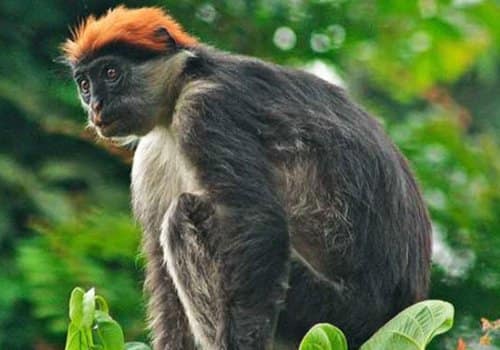
Udzungwa is a primate park and currently 11 species has been identified. Among of them two species found nowhere else in the world, the Sanje Crested Mangabey (Cercocebus galeritus sanjei) and Iringa Red Colobus Monkey (Colobus gordonolum).
Kilombero Valley
The Kilombero Valley is an exceptional resource found outside the park. It covers the entire area immediately east of the park and is drained by Kilombero River whose tributaries originate in the Udzungwa Mountains National Park. The valley has great aesthetic appeal when viewed from certain points in the park during trekking. It also serves as a potential tourist attraction as it provides a variety of potential visitor opportunities including hunting in the Kilombero Game Controlled Area, fishing, canoeing, rafting and other water sports in the Kilombero River. Visitors for Udzungwa Mountains trek who have sufficient time can also visit Kilombero valley and explore its beauty.
Natural Spring
Natural springs on the upper stream of the catchment forest forming various permanent rivers (Lofia, Msosa, Mwaya, Mkula, Rumemo, Sonjo, Ruipa) that flow and pour water to the famous Kilombero Valley. Visiting this spring’s listening water spashing on the rocks leaves a memory to remember.
Hiking Trails
The Udzungwa Mountains offer a variety of hiking trails that cater to different skill levels and preferences. These trails wind through lush forests, showcasing the region’s rich biodiversity and stunning landscapes. Hikers can expect to encounter unique flora and fauna, as well as breathtaking views from various vantage points along the routes. The trails provide an excellent opportunity for both adventure and exploration, making the Udzungwa Mountains a must-visit destination for outdoor enthusiasts.
Sanje Waterfall Trail – 6 km, 4 – 5 hr, height gain 450 m
Sanje trail is the most popular trekking trail to the top of Udzungwa Mountains. Trekking Udzungwa Mountains along this trail starts from the park headquarters along the steep slopes of the eastern side of the mountains. The trail extends across large hilly semi-humid and humid sub-mountain forest formations, to the Sanje waterfalls where water drops for about 180 meters. You can enjoy swimming in the refreshing plunge pool of the top waterfall (around 40 m high).
The total time required to trek the entire trail distance of 12 km up and down is 4 -5 hours. The scenery along this trail is amazing with a panoramic view of the Kilombero Valley. Several endemic animal species such as Red Colobus of Iringa (Piliocolobus gordonorum) and endemic plants can be seen during trekking.
The best time to trek Udzungwa Mountains along Sanje is the morning hours where the sun rays are direct hitting the waterfalls. However the trekking can be done any time of the day despites of the high temperature experienced in the midday.
Although Sanje trail is reknown for a day trek but it can also done 2 days to enable you get a true feel of the forest.by spending a night under the canopy. Trekking in the forest spotting wildlife and splashing in waterfall, at night sleep under a piece of clothes listening to the sound of the forest.
Mbatwa Trail – 2 to 3 days
Udzungwa Trekking through Mbatwa trail takes 2 to 3 days of hike for back and forth with overnight stays in tents. This trail starts at Mbatwa ranger post through the western slope of Udzungwa Mountains with its departure point at Mikumi-Iringa road at the small village of Mtandika. The slopes are gentle along this trail and its vegetation characterized of thorny scrubs and dry and thin woodland tropical formations, often scattered with imposing Baobab (Adansonia digitata) and Candelabra Tree (Euphorbia candelabrum) specimens. The route lead to the large and windy top plateaus at over 2,000 m of height, with Cool Mountain pastures and stretches of high-mountain semi-humid forests. The total length of this trail is about 20 kilometers.
Sonje Waterfall Trail – 3 km, 1- 2 hr, height gain 120m
The second shortest Udzungwa Mountains Trekking trail to the bottom of the Sonje waterfall after 20 minutes of hiking from starting point. The second waterfalls is found 15 minutes of trekking up a steeper path. These falls are pretty good enough to attract any person who loves nature. You can spend sufficient time here walk around the circuit, taking pictures and after that trek down to the starting point following different path.
Mwanihana Peak – 3 Days , 38 km, 3 days, height gain 1850m
Mwanihana Trail offers an exceptional hiking experience for those looking for a more demanding adventure. This trail leads to the summit of Mwanihana Peak, the highest point in the Udzungwa Mountains, and typically requires three days to complete. While the trek demands stamina and perseverance, the breathtaking views from the top make the effort worthwhile. As you navigate through the lush forest, you’ll encounter a rich variety of flora, including towering ferns, ancient trees, and vibrant wildflowers.
For safety reasons, trekkers are accompanied by an armed ranger due to the potential presence of large wildlife, such as elephants and buffaloes, as well as various primates and birds. Additionally, a private cook, porters, and a guide will support you throughout the journey. Upon reaching the summit, you will be rewarded with stunning panoramas of the surrounding mountains, valleys, and the expansive park below, creating an unforgettable experience that highlights the remarkable beauty of the Udzungwa Mountains.
Udzungwa Mountains Trekking Mwanihana Trail Itinerary
Day 1: Arrival and Sanje Waterfall Hike
-
- Arrive at Udzungwa Mountains National Park headquarters.
- Meet your guide and porters, and receive a briefing about the trek.
- Transfer to Sonjo village which is starting point to begin the hike to Njia panda ranger post / campsite, enjoying the lush rainforest scenery.
- While trekking along Mwanihana trail you can encounter animals such as elephants and buffalos thats why you will be accompaned by armed ranger through out the trek
- Camp at Njia Panda public ranger post.
Day 2: Ascent to Mwanihana Peak and Forest Exploration
-
- After breakfast, begin the ascent towards Mwanihana Peak, passing through diverse vegetation zones.
- Keep an eye out for primates and birds along the way.
- Reach a high point on the Mwanihana Ridge, offering panoramic views (weather permitting).
- Explore the surrounding forest, learning about the unique flora and fauna from your guide.
- After spending sufficient time at the peak descend down back to the camp for dinner and overnight
Day 3: Descent and Departure
-
- Enjoy a final morning in the Udzungwa Mountains, savoring the sights and sounds of the forest.
- Begin the descent back towards Sonjo village, the trekking starting point where you will picked and transfered back to park headquarters where you will arrive in the afternoon.
- Departure.
Trekking Package Includes:
-
- Trekking permit at Udzungwa
- Service of the guide, an armed ranger, private cook and porters
- Camping gears (tents, chairs and table)
- Meals (breakfast, lunch and dinner)
- Transfer from the Lodge to Mwanihana Trail
Trekking Package Excludes
-
- Accommodation at Dar es Salaam
- Transfer from Dar es Salaam / Mikumi / Iringa to Udzungwa Mountains
- Flying doctors services
- Any expenses of the personal nature
Lumemo Trail – 5 days, 65 km
Lumemo is longest and most arduous trail in Udzungwa. Visitors who trekking Udzungwa Mountains have to be transferred to the start of the trail which is beyond Ifakara on the Lumemo River. From here they will hike up into the hills for 4 nights, returning along the same trail as Mwanihana not far from Hondo Hondo, where they will be picked up and brought back to the camp for a nice shower and drinks. The Lumemo trail leads deep into the heart of the Udzungwas, ascending ridges, and descending into two deep valleys – areas where few people have ever been and the wildlife there has had virtually no contact with humans. You need to be a competent hiker in good physical condition to attempt this trail.
Hidden Valleys Trail (Campsite 3 trail)- 14km, 6-8h, height gain 1000m
This trail starts from campsite 3 a short distance from the park headquarters towards the Njokamani waterfall. Since this trail pass across the hidden valley with grass plains where a number of animals are found, visitors are escorted by an armed ranger to ensure for their safety. Elevation along the trail is also steeper so the trek is requires to start in the early morning to make sure they reach the summit which stands at 130m above sea level.
Njokamoni Trail – 5 km, 4-5 hr, Height gain 400m
Njokamoni trail take between 4 to 5 hours of trekking the distance of about 5 km. This trail pass behind the Hondo Hondo Camp to the Njokamoni waterfalls. When trekking Udzungwa Mountains along this trail you will have the high chance to the Sanje Mangabey and troupes of monkeys. Other animals that can be seen and is very similar to the Sanje trail except a lot less walked. As a result, it is common to see many troupes of monkeys with a better chance of seeing the Sanje Mangebey. You may also see red duiker, elephant shrews, squirrels and other rare forest mammals.
Trekking Udzungwa Mountains along Njokamoni trail you will to start from TANAPA HQ and end the walk 1km down from Hondo Hondo Camp.
Prince Bernhard Falls – 1 km, 1/2 hr, height gain 30-80 m
The Prince Bernhard trails was named after prince of the Netherlands who was the president of the World Wildlife Fund at the time when Udzungwa Mountains National Park is gazetted. .
Starting just behind the park headquaters the Prince Bernhard trails is the shortest trail in trekking Udzungwa Mountains ideal for every one. This trail has the best scenery and beautiful small two waterfalls. In addition to that several insects such as butterflies and small wild birds can be observed during the trekking. Also during trekking Udzungwa Mountains along this trail you can observe about four species of Primates such as Yellow Baboon (Papio cynocephalus), the Blue Monkey (Cercopithecus mitis), the Angolan Black and White Colobus (Colobus angolensis), and the rare and endemic Red Colobus of Iringa (Piliocolobus gordonorum) can be spotted.
For vistor who intend to trek Udungwa Mountains along the long trails can take the Prince Bernhard Falls trail as a warm up preparation for their trekking.
The ideal time requires to trek Udzungwa mountains along this trail is only 1/2 hr but visitors with more time can extend it to a bit more distance.
Kilombero River – 1 day
This tour is mainly conducted outside the Udzungwa Mountains National Park at Kilombero River. Drive for about 2 to 3 hours from Mang’ula to Ifakara Ferry Boat of Ifakara where you will embark into a canoeing safari along the Kilombero River. Discover various fluvial environments with full of interesting aquatic flora and fauna. During the canoeing safari you will see various aquatic birds and several specimens of Nile Monitor (Varanus niloticus), Nile crocodile (Crocodylus niloticus), and Hippo (Hippopotamus amphibius).
The pirogue which will be used during the canoeing are made from tree trunks.
Udzungwa Mountains PackList
For a successful Udzungwa Mountains trekking you should bring the following
-
-
- Comfortable hiking shoes
- Lightweight and breathable clothing
- Rain gear
- Insect repellent
- Sunscreen
A hat
- A water bottle
- Sleeping bag
-

The Best Time to Trek Udzungwa Mountains
The optimal time to explore the Udzungwa Mountains is during the dry season, which typically spans from June to October. During these months, the weather is more stable, offering clearer skies and less rainfall, making trekking conditions more favorable. Additionally, the cooler temperatures enhance the overall experience, allowing trekkers to fully appreciate the stunning biodiversity and breathtaking landscapes of the region. Planning your trek within this timeframe will ensure a more enjoyable and rewarding adventure in the Udzungwa Mountains.
Getting To Udzungwa Mountains
The Udzungwa Mountains are mountain range in south-central Tanzania. The mountains are mostly within Iringa Region, south of Tanzania’s capital Dodoma. The national park is located about 60km from Mikumi national park, 360km west of Dar es Salaam. Visitors who come for trekking, hiking, climbing, walking, or camping in Udzungwa Mountains can reach here by either of the following means:
Road: The Park can be accessed by road network from Dar es salaam (380km) or from Arusha, Kilimanjaro and Mbeya.
Train: TAZARA railway from Dar Es Salaam to Zambia that passes through local town of Mang’ula takes you close to the park’s gate.
Air: Charted flights through nearby two airstrips of Msolwa and Kilombero
Accommodation During Trekking the Mwanihana Trail
Accommodation during trekking Udzungwa Mountains through Mwanihana Trail is typically in public campsite within the park. This campsite provides a safe and comfortable camping ground where you can perch your tents and rest after a day of trekking. You can expect:
-
- Tented Campsite: You’ll be sleeping in dom tents, provided by us or that you bring yourself.
-
- Basic Toilet Facilities: Pit latrines are usually available at the campsites.
-
- Designated Cooking Areas: Your private cook and porters will prepare meals in designated cooking areas.
-
- No Electricity: Be prepared for no electricity in the campsites, so bring headlamps or flashlights.
While the accommodation is basic, it adds to the adventurous and immersive experience of trekking Udzungwa Mountains.
FAQs About Trekking Udzungwa Mountains
What is the best time to trek Udzungwa Mountains?
The dry season (June to October) is generally considered the best time to trek Udzungwa Mountains, as the trails are less muddy and the weather is more predictable. However, the park can be visited year-round.
How difficult is the Mwanihana Trail?
The Mwanihana Trail is considered moderately challenging, with some steep climbs and uneven terrain. A reasonable level of fitness is required.
What should I wear for trekking?
Wear sturdy hiking boots, lightweight and quick-drying clothing, and waterproof outerwear. Bring layers as the temperature can fluctuate.
What is the risk of malaria in Udzungwa Mountains?
Udzungwa Mountains is a malaria zone, so it’s essential to take malaria prophylaxis as prescribed by your doctor.
Can I trek independently in Udzungwa Mountains?
No, it is mandatory to hire a local guide for trekking Udzungwa Mountains.
Trekking Udzungwa Mountains offers an unparalleled opportunity to experience the raw beauty and biodiversity of Tanzania’s southern highlands. The Mwanihana Trail provides a challenging yet rewarding adventure, allowing you to immerse yourself in the lush rainforest, spot unique wildlife, and witness stunning waterfalls. With careful planning and preparation, your trekking Udzungwa Mountains adventure will be an unforgettable journey into the heart of Africa. So, are you ready to answer the call of the wild? Let Udzungwa Mountains enchant you!

